

On the morning of 9 December 2025, in Vientiane Capital, the Department of Foreign Trade, Ministry of Industry and Commerce in its role as the Secretariat of the National Trade and Transport Facilitation Committee and as the implementing agency and lead agency for Subcomponent 2.3 of the SEARECC Project, in collaboration with the Customs Department, Ministry of Finance and the consulting firm CTS, organized a consultation meeting on Coordinated Border Management (CBM) under the Southeast Asia Regional Economic Corridor and Connectivity (SEARECC) Project.
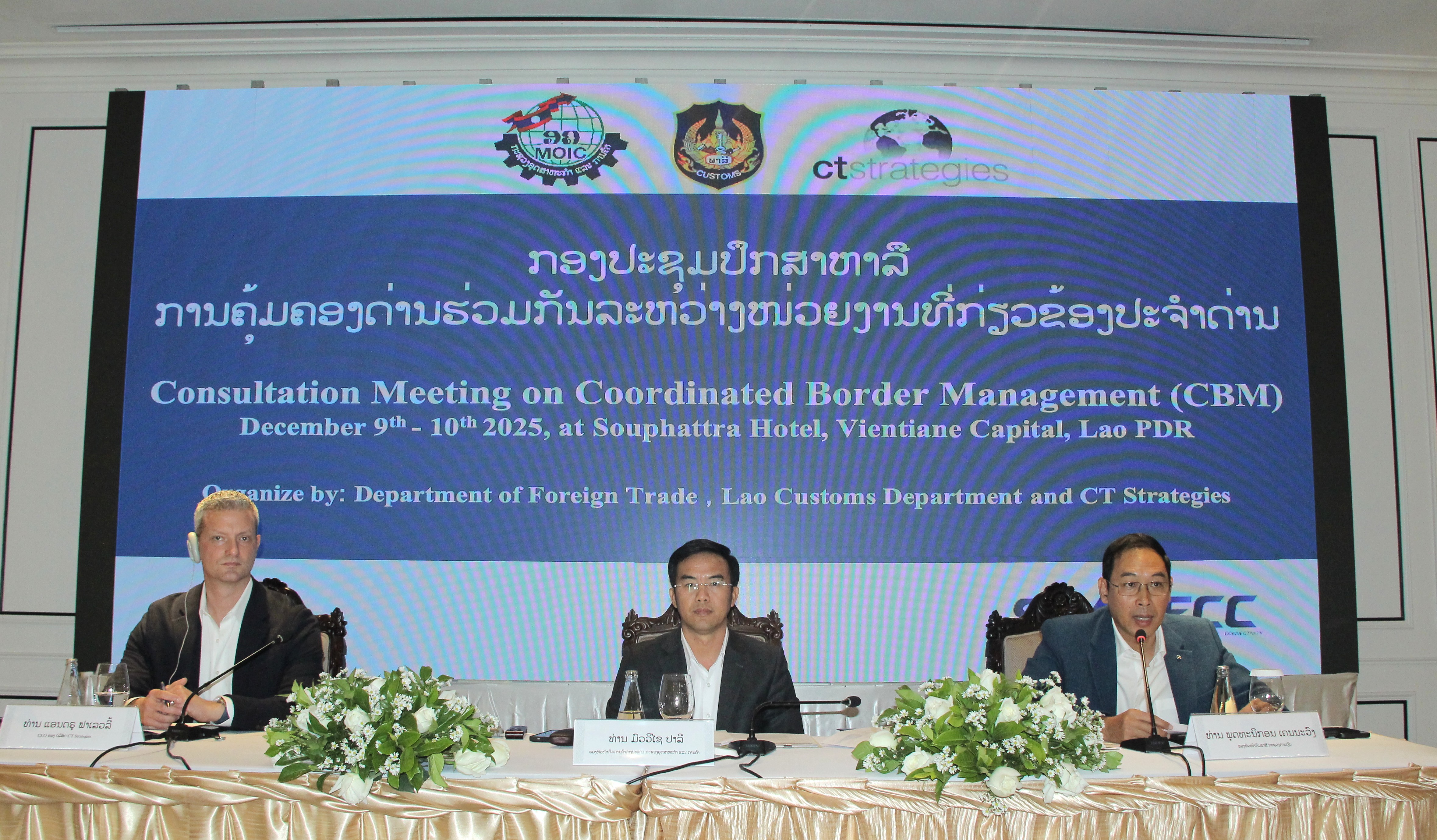
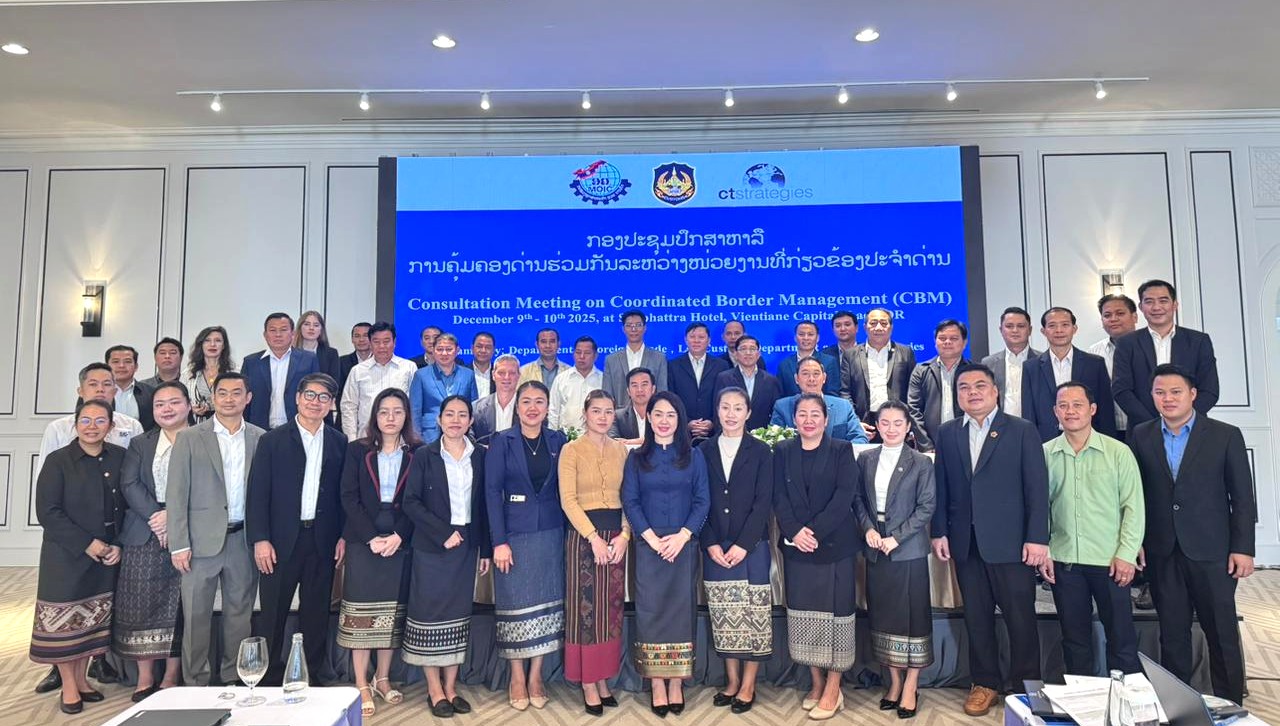
The meeting was co-chaired by Mr. Mouavixay Palee, Deputy Director General of the Department of Foreign Trade, Ministry of Industry and Commerce, and Mr. Phouthanikone Khanenavong, Deputy Director General of the Customs Department, Ministry of Finance. Participants included Mr. Andrew Farrelly, CEO of CTS, along with officials and representatives from the Department of Transport, Customs Department, Immigration Police Department, Department of Plant Protection, Department of Livestock and Fisheries, Food and Drug Department, the Nam Ngeun and Pang Hok International Border Checkpoints, and technical staff from the implementing agencies (IAs), and the Project Management Unit (PMU) of the SEARECC Project.
The objective was to gather ideas for the development of Standard Operating Procedures (SOPs) for implementing CBM, as well as to hear presentations on work related to trade facilitation, customs procedures, border clearance times, and international best practices from relevant government agencies and CTS.
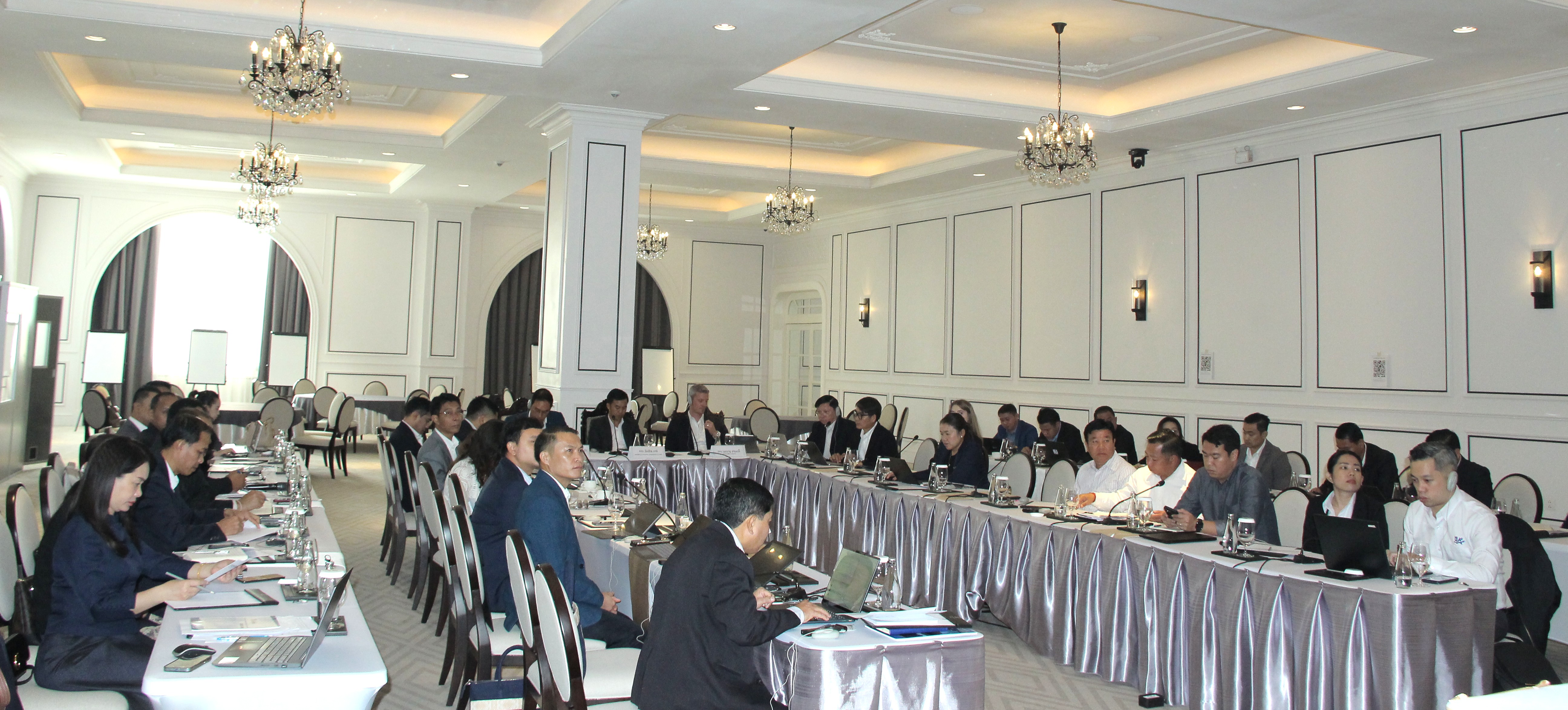
The meeting chair noted that CTS from the United States was assigned and had collected data from relevant public and private sector stakeholders in several northern provinces, including at Nam Ngeun, Pang Hok, and Thanaleng border checkpoints. CTS has completed analytical reports on legal and regulatory gaps, reports on reviewing import–export licensing processes of various sectors, and reports on the mandate of the National Trade and Transport Facilitation Committee. Key findings and recommendations from the experts highlight the importance of CBM. It was also observed that border clearance procedures are not yet harmonized nationwide. Therefore, all relevant sectors must work together to resolve and improve these issues to ensure border management operations become more efficient and standardized.
The meeting featured extensive exchanges of views on the topics presented, highlighting practical challenges and current implementation conditions. This information will support CTS experts in developing a CBM operational manual that is best suited to the context of the Lao PDR.
The meeting was conducted over two days and then concluded.
Please share your feedback below and help us improve our content.