

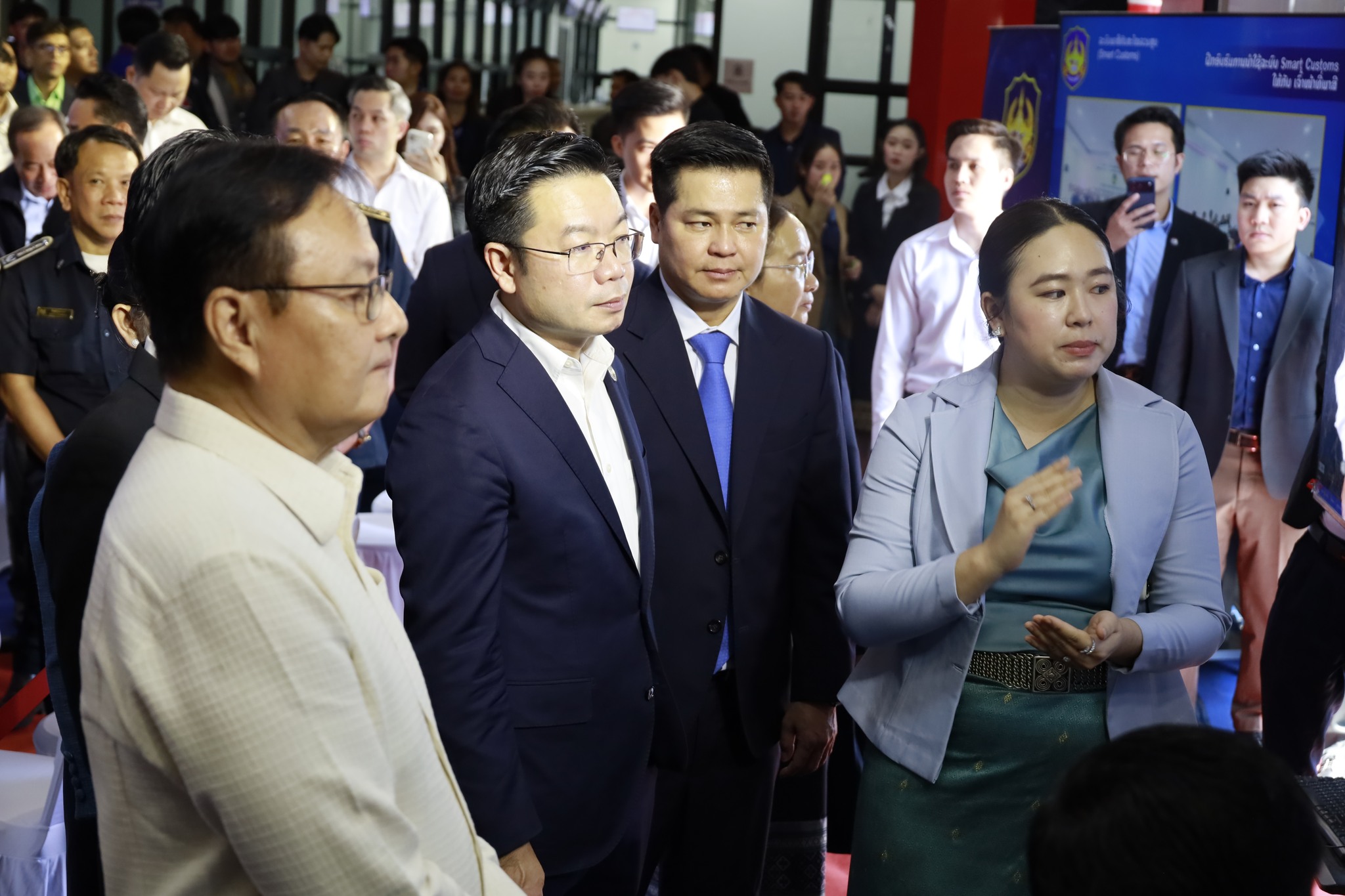
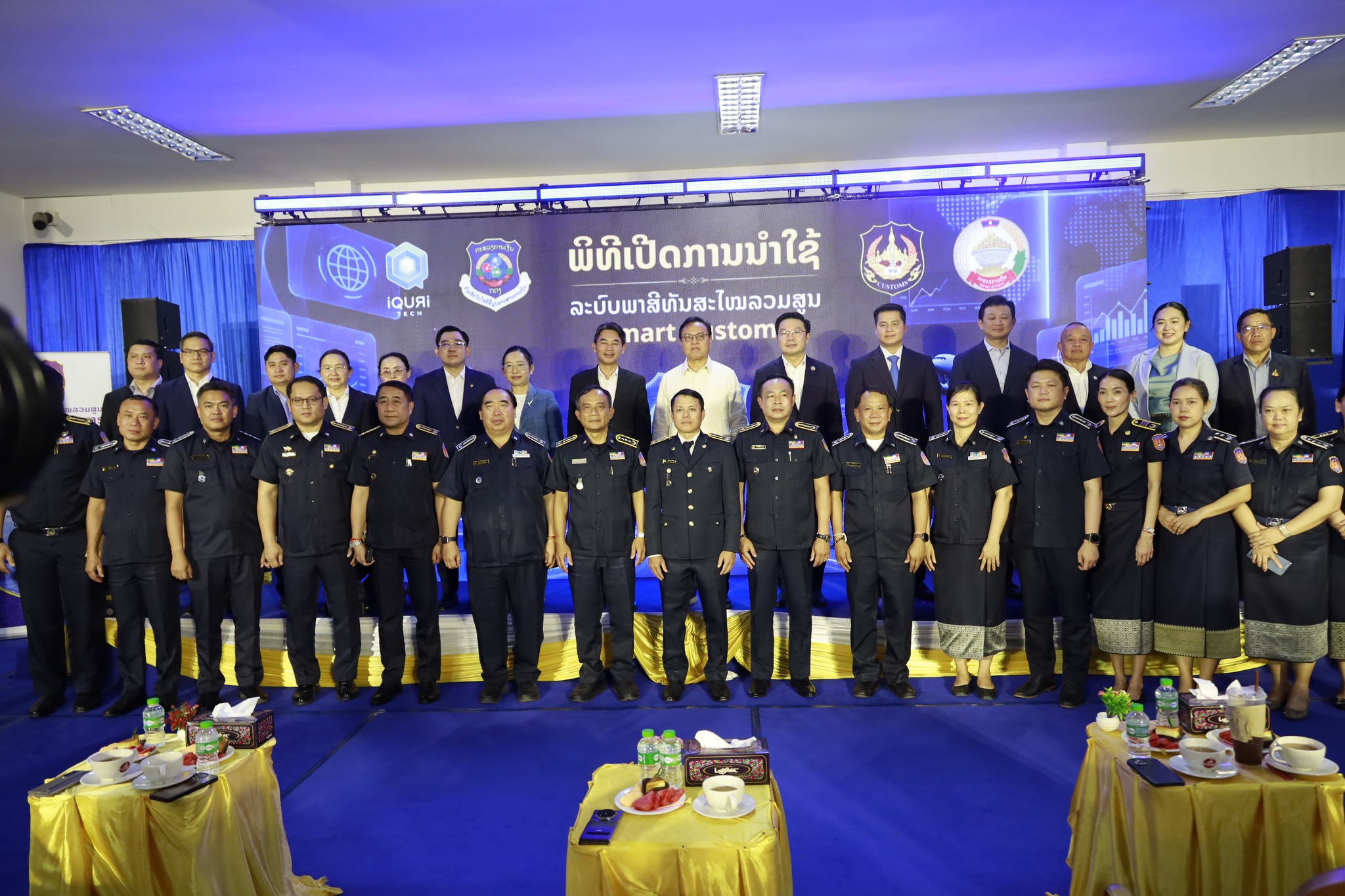
On 1 June 2026, at the Thanaleng Dry Port International Customs Checkpoint and the First Lao–Thai Friendship Bridge in Vientiane Capital, the Ministry of Finance officially launched the centralized modern customs system, called “Smart Customs.”
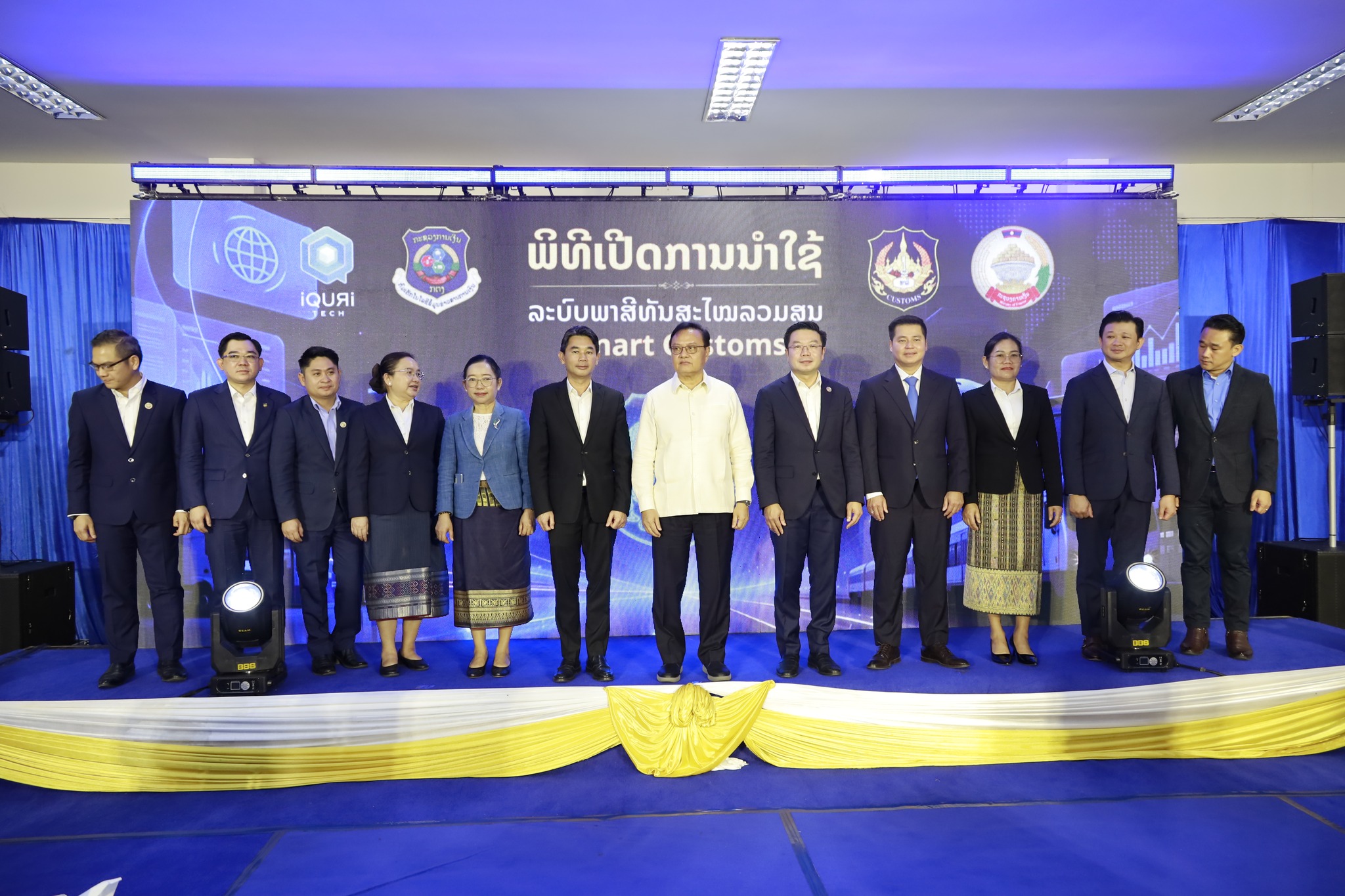
The launching ceremony was attended by H.E. Mr. Santiphab Phomvihane, Deputy Prime Minister and Minister of Finance, together with Deputy Ministers, the Vice President of the Vientiane Capital Administrative Authority, and customs officials.
The Smart Customs system was developed through the collaboration between the Department of Financial Information Technology, the Customs Department, and IQURI Tech Co., Ltd., which was responsible for designing and developing all modules related to customs administration, export and import management, and the transit of goods and merchandise through border customs checkpoints.
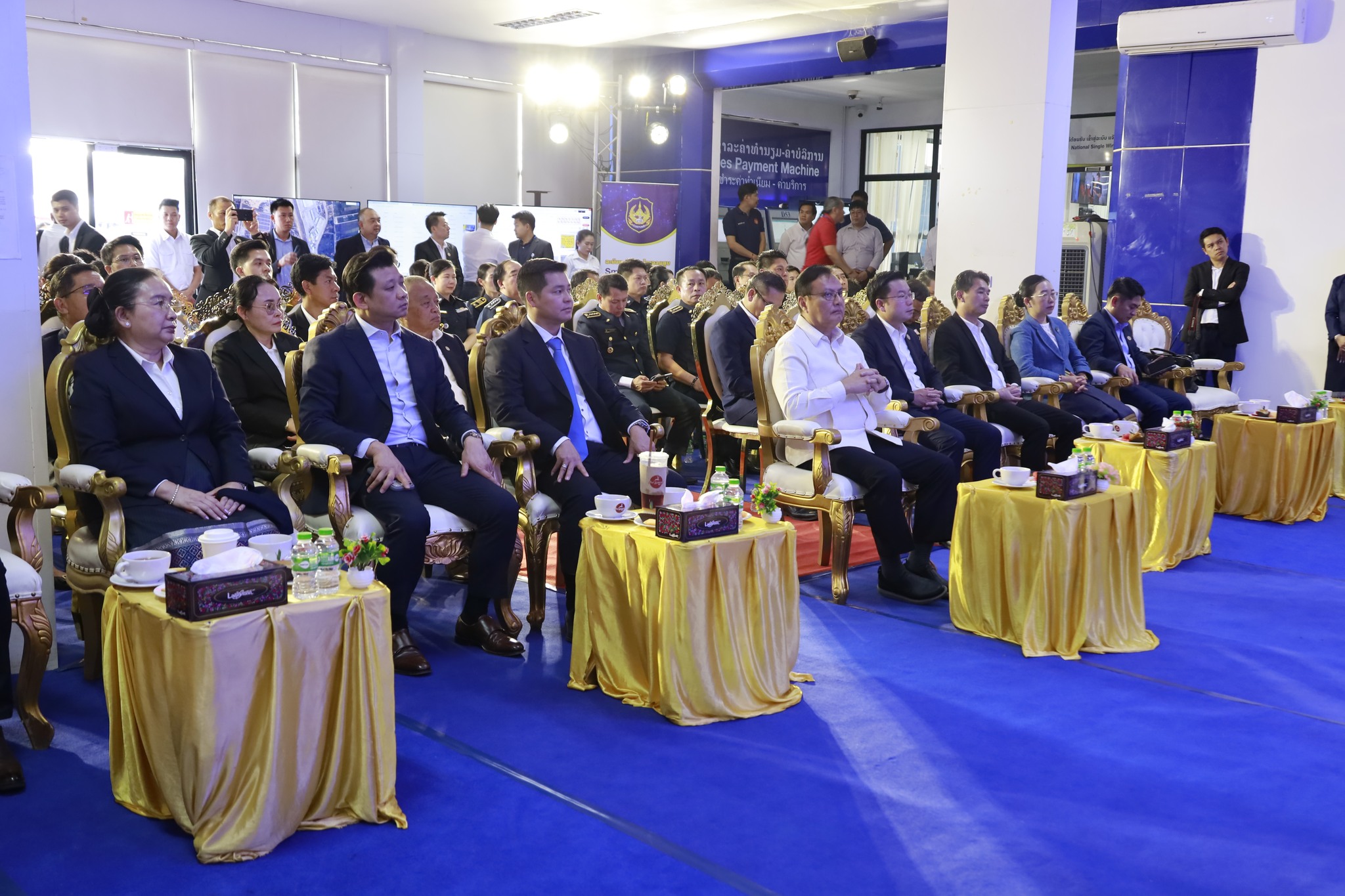
Smart Customs serves as a digital platform that centralizes and integrates electronic customs information by connecting all systems related to customs operations into a unified Data Hub. The system is designed to facilitate trade and simplify procedures for importers and exporters while supporting the modernization of revenue collection. It forms part of the Government’s priority agenda to improve and modernize the management of revenue collection from imports and exports, as well as to facilitate cross-border trade, in accordance with the Five-Year Revenue Collection Modernization Action Plan (2026–2030).
Next step is to focus on expanding the implementation of the modern customs system, particularly by rolling out completed modules and continuing the development of additional modules. The system will also be upgraded into a mobile application to enhance accessibility for customs officials and business operators, enabling easier access, notifications, monitoring, inspections, and customs clearance procedures.
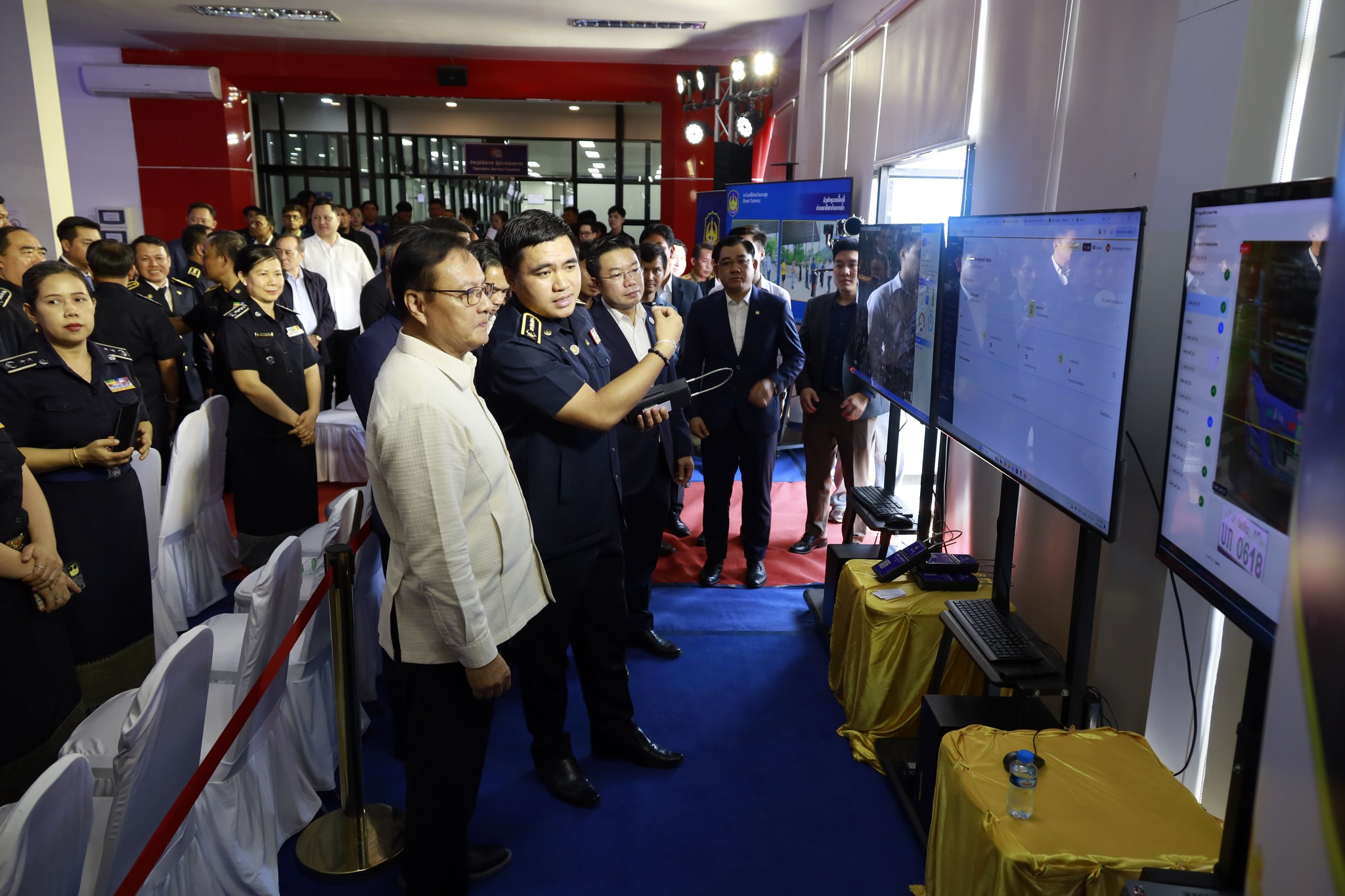
In addition, electronic signatures will be introduced, and certain paper-based forms will be eliminated to reduce congestion in document processing at border checkpoints. This initiative aims to promote a fully integrated electronic customs environment and improve the efficiency of customs administration and trade facilitation.
Please share your feedback below and help us improve our content.