

On 27 May 2026, the Secretariat of the Trade and Transport Facilitation Committee of Borlikhamxay province conducted a joint field visit with the Management Committee of the Pakxan–Bueng Kan International Border Checkpoint. The purpose of the visit was to receive reports on the operational situation of the checkpoint, collect information related to import, export and transit activities, review customs clearance procedures, assess risk management measures, and inspect the readiness of facilities and service equipment at the checkpoint.
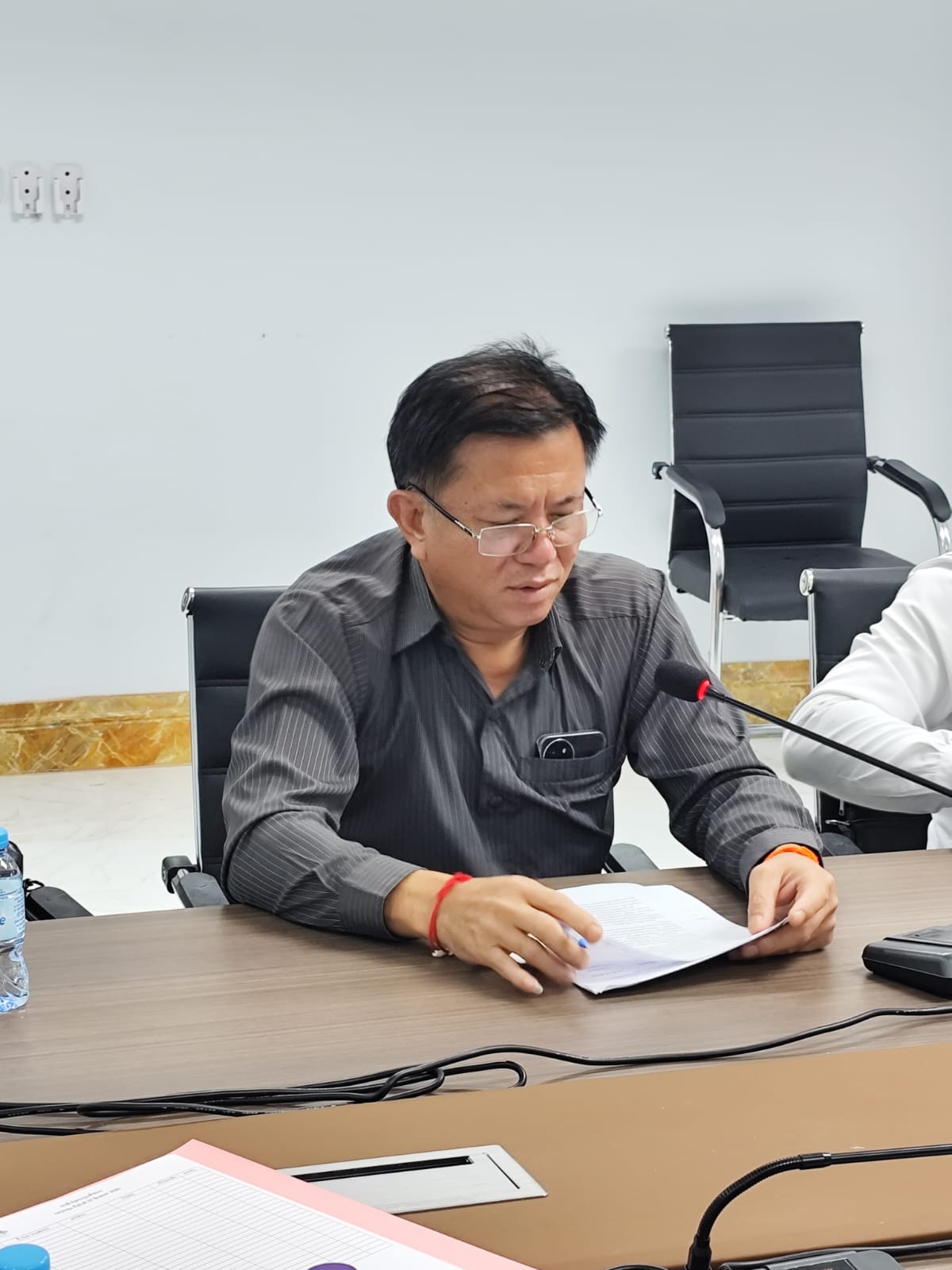
Mr. Phosone Thalaphone, Deputy Head of the Department of Industry and Commerce
The Secretariat delegation was led by Mr. Phosone Thalaphone, Deputy Head of the Department of Industry and Commerce, and Mr. Ounla Xayyanone, Deputy Head of the Foreign Trade Division, together with several technical staff members from the Secretariat. The checkpoint management side was led by Mr. Ded Sivixay, together with representatives from Customs, Immigration Police and relevant agencies stationed at the checkpoint, who attended the meeting in full participation.
Following the field visit and discussions, the overall assessment indicated that since the opening of the friendship bridge, trade activities through the checkpoint have shown positive growth, particularly in terms of increasing cargo volume. However, the variety of goods remains limited, with the majority consisting of fuel products, construction materials and consumer goods. Regarding provincial revenue collection targets for 2026, the current performance has reached approximately 70 percent of the annual plan. In terms of infrastructure, service equipment and personnel, the checkpoint was assessed as being fully prepared to support import, export and transit activities.
Regarding import, export and transit operations, most imported goods remain traditional products and are still less diversified compared to neighboring provinces. Transit cargo volumes also remain relatively low and have not yet shown significant expansion. Meanwhile, the average number of people crossing the border currently stands at approximately 200–250 persons per day. For fee collection and service charges, the checkpoint has implemented the Smart Tax system and no longer accepts cash payments, ensuring transparency and traceability in financial transactions.
With regard to customs clearance procedures, it was reported that trucks carrying complete documentation can currently be processed within approximately 13–15 minutes per vehicle. Certain imported goods, such as fuel products, which require quality or standards inspections, may take approximately 20–30 minutes per vehicle. Concerning risk management measures, ordinary goods, particularly agricultural products, are generally not subject to routine inspections unless credible intelligence or risk indicators are identified. To date, no major risk-related incidents or illegal cargo activities have been reported at the checkpoint.
The field inspection further noted that the Pakxan–Bueng Kan International Border Checkpoint has spacious facilities, adequate infrastructure and well-prepared service equipment capable of supporting future growth in cross-border trade and transportation activities.
Recommendations and Future Directions
Following the assessment, the delegation proposed several recommendations and future action plans as follows:
- The checkpoint management committee should install clear public information boards and promotional signage displaying official service fees, charges and necessary regulations in order to facilitate service users, enhance transparency, build public confidence and attract more traders and transport operators to use the checkpoint.
- The checkpoint management committee should continue coordinating with the Thai border checkpoint authorities to discuss measures for attracting more diversified import, export and transit goods based on applicable regulations, legal frameworks and mutual benefits for both sides.
- The checkpoint should continue improving customs clearance procedures and service delivery to ensure greater efficiency, transparency and reduced waiting times for operators, thereby enhancing the competitiveness of the checkpoint and accommodating future increases in cargo traffic.
- The checkpoint management committee should coordinate with relevant domestic and international stakeholders to explore opportunities for increasing transit cargo and attracting new categories of goods to utilize the checkpoint, in line with the checkpoint’s infrastructure capacity and operational potential.
This field mission represents another important effort in monitoring actual operational conditions and identifying practical measures to further improve trade and transport facilitation services. The initiative is expected to contribute to supporting future economic growth and expanding cross-border trade activities in the province.
Please share your feedback below and help us improve our content.